
So first thing’s first: This is long overdue, but last September, I had some time off work and decided, ‘I know, I’ll go to the US by myself for the first time! Why not Boston? (And surrounding areas)’.
Why there, then?
Simply put, as much as I have wanted to visit the US for ages, a big part of me wanted to see something other than New York or Florida, or the other areas that seem most popular with UK and European tourists, and, well, Boston is conveniently placed on the East coast, and there’s no shortage of stuff there – this also saved me having to hire a car.
So, there is more to it than just that, though. To start with, I am a giant history nerd, and for those interested, Boston and some of the surrounding areas has a variety of landmarks and sites connected to the early colonial era, revolutionary years, and later periods. Added to that, the choice of food is nothing short of fantastic (though in places pricey), the cultural mix is fascinating, and there’s no shortage of impressive buildings. So, without further ado…
So what did you do?
I’ll make the overall itinerary short and sweet, and then move onto details:
Day 1 – Leave home at 3am, fly out to Boston Logan from Heathrow, get interrogated by customs, get into Boston, book into hostel, succumb to jet lag for a few hours and then go out to get food at Quincy Market.
Day 2 – Start by doing most of the freedom trail – Granary Burial Ground, Old State House, Old South Meeting House, Paul Revere’s House, USS Constitution – ship was closed that day due to weather, however, museum was open. Go through museum, leave museum, walk the enormous distance through Charlestown, across the Charles River into Back Bay, and then walk all the way to the Prudential Center – go up big tower (Prudential Tower), take many pictures, stream the view to some friends, then head back, and grab dinner in Chinatown near the hostel.
Day 3 – Leave hostel, take The T for the first time (Massachusetts premier subway service), and get to the Museum of Science, right over the Charles River. Finish at museum early afternoon, and head down to the docks to actually see the USS Constitution this time, as well as USS Cassin Young. Head back, get food near hostel again, bed.
Day 4 – Catch The T to New England Aquarium – look at fishes and penguins for a couple of hours, and then head off to Long Wharf – expected to go to Salem today, but sadly, all the boats that go there are closed. Something about a hurricane? Either way I want my boat ride, dammit! Good job the harbour tour boat was still running, and also included in my ticket. Have boat ride, then head back to accommodation to change into running gear hop on The T again to go to Carson Beach in South Boston for a run then a swim. Get The T back, and go to the South Street Diner for the worlds best greasy food in my humble opinion, before finally heading back to the hostel.
Day 5 – Catch The T to Cambridge (the Massachusetts one) – visit the Harvard Natural History Museum, Peabody Archaeology Museum and some of the Harvard University buildings, as well as some shops around Cambridge. Take The T to North End to grab food, and then head over to Long Wharf to eat, before heading back.
Day 6 – Venture out to Fenway Park for a tour, not for any true interest in baseball, but simply because it’s Fallout 4’s Diamond City. Go back for lunch, and then head out to Boston’s South Station, and this time catch the commuter rail to Readville, a small Massachusetts town that’s near the Blue Hills Reservation – get mildly lost, before finding a trail through the reservation. Eventually get back, and chow down on a Japanese-American themed burger.
Day 7: Get The T to Long Wharf to finally catch my boat to Salem – it’s pouring down with rain and the crossing felt a bit perilous, however I did eventually arrive – main activities were the Witch Museum, and Peabody Essex Museum (as they were indoors).
Day 8: Sunny weather and completely the opposite to yesterday – start by heading out past the South Station, and arrive at the Tea Party Museum, ready to commit some high treason, followed by actually trying the tea at the tearoom. Finish up, grab an American Mackie’s complete with bright orange Fanta, and then take The T all the way to Jamaica plain, before making the long walk to Franklin Park Zoo, spending the next couple of hours with the wildlife of the world before heading back to accommodation, and then out one last time before my final departure to get dinner around the corner from Faneuil Hall.
Day 9: Get up at half one in the morning in order not to be late for the last bus that would get me to Logan Airport in time for my flight – experience difficulty finding said bus but eventually board and end up at airport, and finally depart after waiting a few hours for security to open. All in all, managed not to lose anything or cause a diplomatic incident, so, great success! (And get greeted by pouring rain upon landing at Terminal 5 – Lovely!)
Okay, now for some more depth – what were the main highlights?
Good question – rather than go through each day in painstaking detail, I will discuss all the main points of interest in segments, with reference to the above itinerary. To start:
The Old

History lesson time. Boston, Massachusetts was founded in 1630 by English settler William Blaxton, and is known for being one of the oldest and most historically prominent cities in the United States, with the area having been inhabited prior to the colonial era by the Massachusett People (where the state gets its name, if you hadn’t guessed), and having a storied history from the early puritan arrivals, through to the revolutionary era, nineteenth and twentieth century expansion all the way up to more modern projects. A historically important seaport, military location, centre for higher education and more, it is no wonder that, being the massive history nerd I am, couldn’t wait to visit as soon as I planned the trip out.
Follow the Freedom Trail
So as mentioned, a large part of my first full day in the area was spent exploring many of the sites along the eponymous Freedom Trail. After going through Boston common (the oldest designated public park in the US) and past the very impressive gold domed Massachusetts State House, one of the first true stops along here was the Granary Burial Ground, across the way from the nearby Kings Chapel. Here, you can find the tombstones of a surprising number of individuals associated with the city’s history.
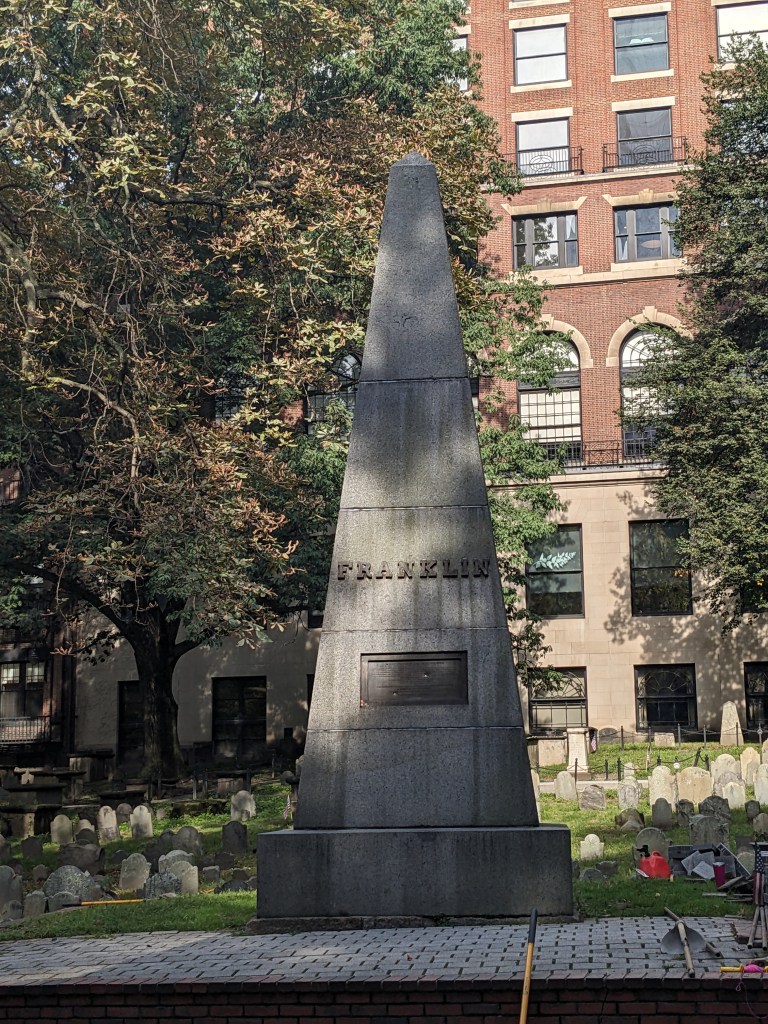
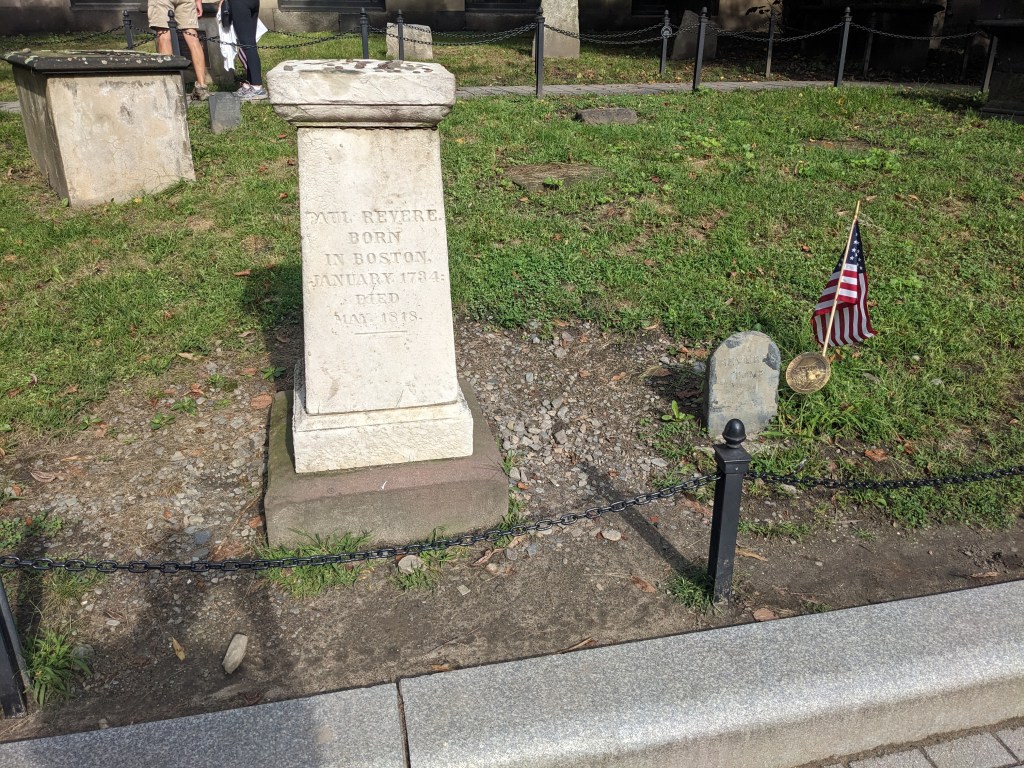
The big obelisk pictured is not dedicated to Benjamin Franklin. It is, however, dedicated to his parents, Josiah and Abigail. Benjamin is buried in Philadelphia, not Boston. Below is the grave of Paul Revere. We’ll get to him. Other notable burials include Samuel Adams, signer of the Declaration of Independence, Crispus Attucks, believed to be the first person killed during the Boston Massacre, Mary Goose (AKA Mother Goose), to name but a few. Some of those names may come up again, but moving on to the next location:

In the middle of State Street, nestled amidst towering modern skyscrapers but standing out nonetheless, is what could easily be mistaken for an old fashioned English town hall, if you took away the American cityscape surrounding it. And that’s because, essentially, that’s what it once was. The Old State House, as it is now called (not to be confused with the previously mentioned Massachusetts State House by The Common, built later on but also very impressive), was erected as the centre for government administration during the colonial era. Originally a wooden townhouse, but rebuilt in brick in 1713, the Old State House is a popular site on the Freedom Trail. I had booked an all in one ticket for various attractions in and around the city, and, if I recall, this was the first place I visited with this. Once you have got in via the gift shop, the first floor is laid out as an exhibition/museum, taking you through some of the city’s history, as well as exploring the legacy of the American Revolution. Highlights included information on the colonial governance, build-up to the Revolution, Boston Massacre and the Tea Party, as well as exhibits on how Boston has changed over the years.

(Doing my bit for King and Country)
In all seriousness, though, as a Brit, this was definitely worth seeing. It’s quite odd, I definitely felt like I was in another country, and yet, here on display you can see the royal coat of arms, examples of 18th century English architecture, a general touch of the familiar. I think that this side of the pond, there has always been a basic awareness of American history, people hear about this place called Boston where this Tea Party thing once happened, they know roughly who George Washington was, what with this era of US history also being intrinsically a part of British history and all that, however, I believe there’s only so much opportunity to really explore it in depth (perhaps one of the best places you can go here in the UK would be certain military museums dedicated to regiments that partook in the revolution).
One thing I remember best was some of the information around the Boston Massacre, which happened on the street very near to the Old State House – in March of 1770, at an already tense time following tariffs imposed by the Crown on imports to Boston and the other colonies, a series of events led to a riot breaking out on State Street – tensions quickly rose, with a group of guardsmen being mobbed by locals, until it all came to a head when ultimately, tragically, the soldiers believed they had been given the order to fire into the crowd. You may have observed that as mentioned previously, the first victim of the massacre was believed to be one Crispus Attucks, whom was black or mixed race, possibly a freed slave, but this is not known for sure. In fact, very little is actually known about his life prior to the events of the massacre, but what is known is that as well as the massacre as a whole being a key flashpoint to what would eventually spiral into the American Revolution, Crispus himself was later seen as something of a martyr during the US Civil War, and a rallying point for the abolitionist cause – overall just goes to show how unpredictable the tides of history are, when random events can have such far reaching consequences. Either way, now, we’re going to leave the exhibition area, and go upstairs.

Once you have ascended the impressive Georgian spiral staircase, if you then head to the East Wing, you will find yourself in the above meeting room, recreated to how it might have looked during the colonial era, minus the modern displays. Out of those big doors in the middle is the balcony where the Declaration of Independence was first read to Bostonians. Left and right of this above the fireplaces, you see the portraits of two British Kings: James II, and Charles I. Why them, though? Both reigned during the 17th century, some years before the start of the revolution?
To go off on a bit of a tangent, one of the best things about this visit were the enthusiastic and well informed staff. When I first entered this room, there were a couple of other visitors sat round the table, and one of the staff members who was just starting to give a talk – this covered some of the ground I had looked at in the downstairs exhibition, as well as some of the finer aspects of governance during the colonial and then post-revolutionary eras. I was curious, so I decided to bring up the paintings, wondering if they were originals or not. I don’t think the person giving the talk was entirely sure, but what she did point out is what these two monarchs have in common – they were both deposed. Twist the knife in, why don’t you? (however I do appreciate a good sardonic joke). I’ve since looked them up and I assume they must be reproductions, as it seems the originals are in London’s National Portrait Gallery, and I would also suggest that if they were contemporary, they would be of George III instead. Maybe someone will correct me.
Either way – in the picture, you will also see reproduced copies of various documents associated with this era, many of which showed the darker side of politics during this era.
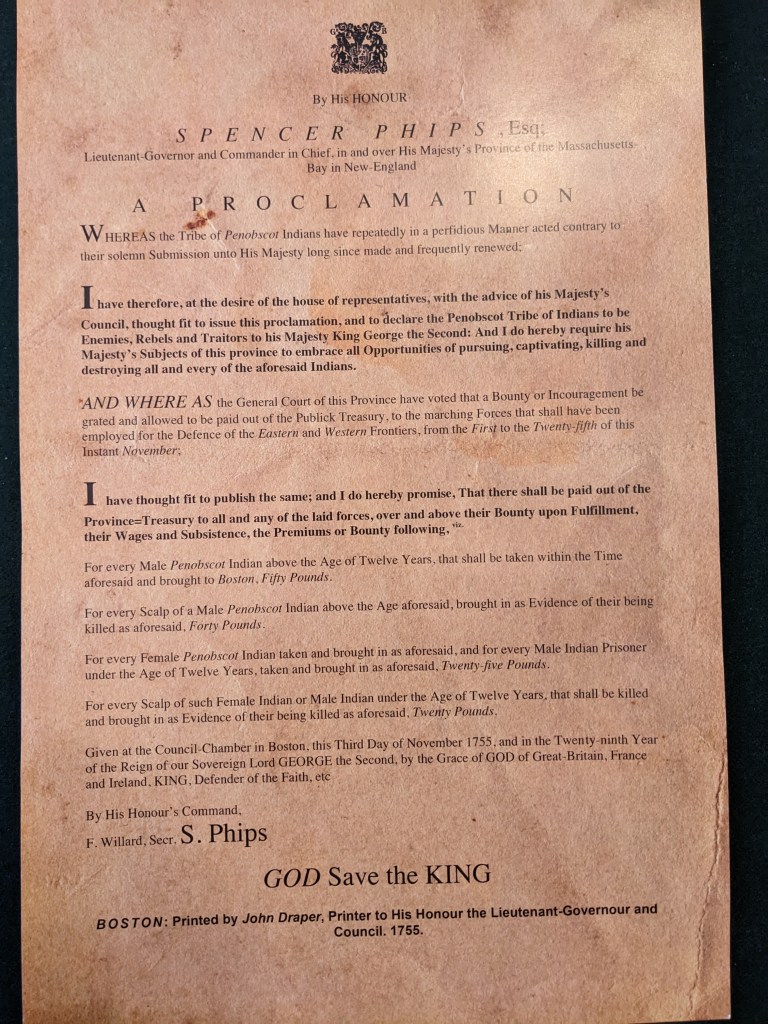
Above is essentially a bounty order issued to Bostonians calling for Penobscot people to be hunted down in exchange for pay or land. There were other similar ones, as well as documents relating to the start of the revolution, this happened to be the one I was sitting by. One thing I found refreshing was how as a museum, the displays and the staff were able to handle this kind of thing with nuance – I do believe there has been a popular trend for figures such as George Washington, or indeed many individuals from British history, to be shouted down or denigrated due to association with things like this, and in many cases there have been genuine failings, but this should not be used as a basis to entirely dismiss their contributions – a point which I was glad to hear some of the staff express. Any in-depth study of history will teach you that it is incredibly messy, often blood soaked, and that we really have to be careful of our own biases when judging people of the past who were not privy to the same information we are today. I would say overall, I was very pleased with how the Old State House was set up, and was able to spend just over an hour taking in the information and admiring some of what was on display.
We leave the Old State House now, and head down Washington Street until we reach the Old South Meeting House (which you can also get into on the same ticket).
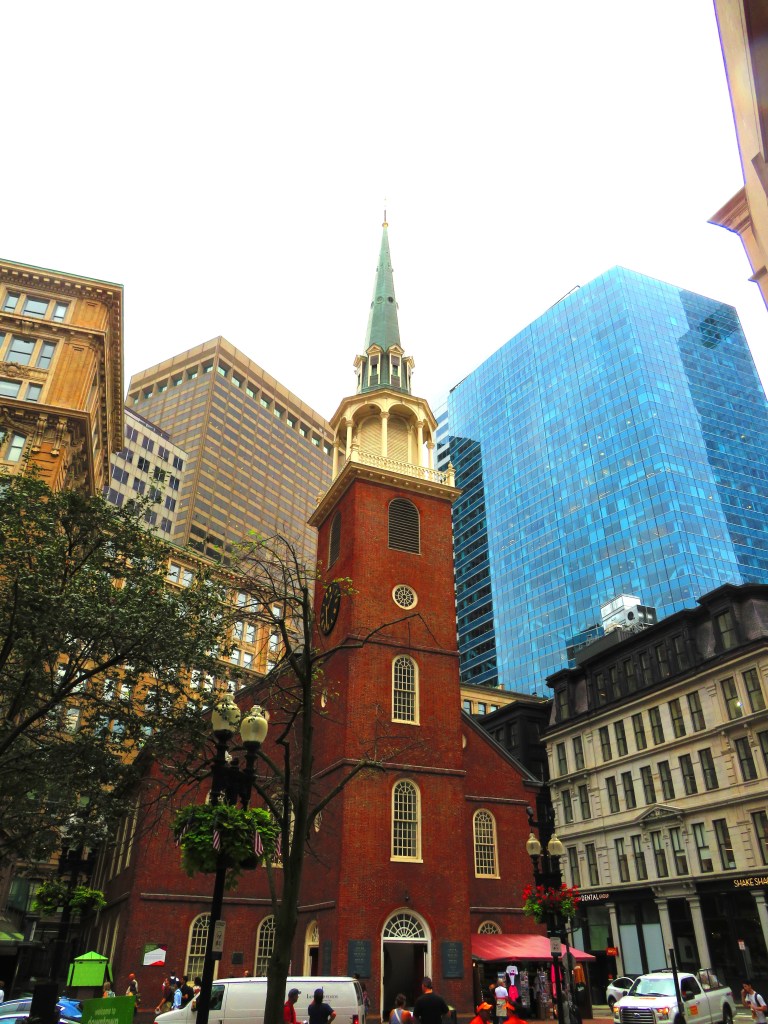
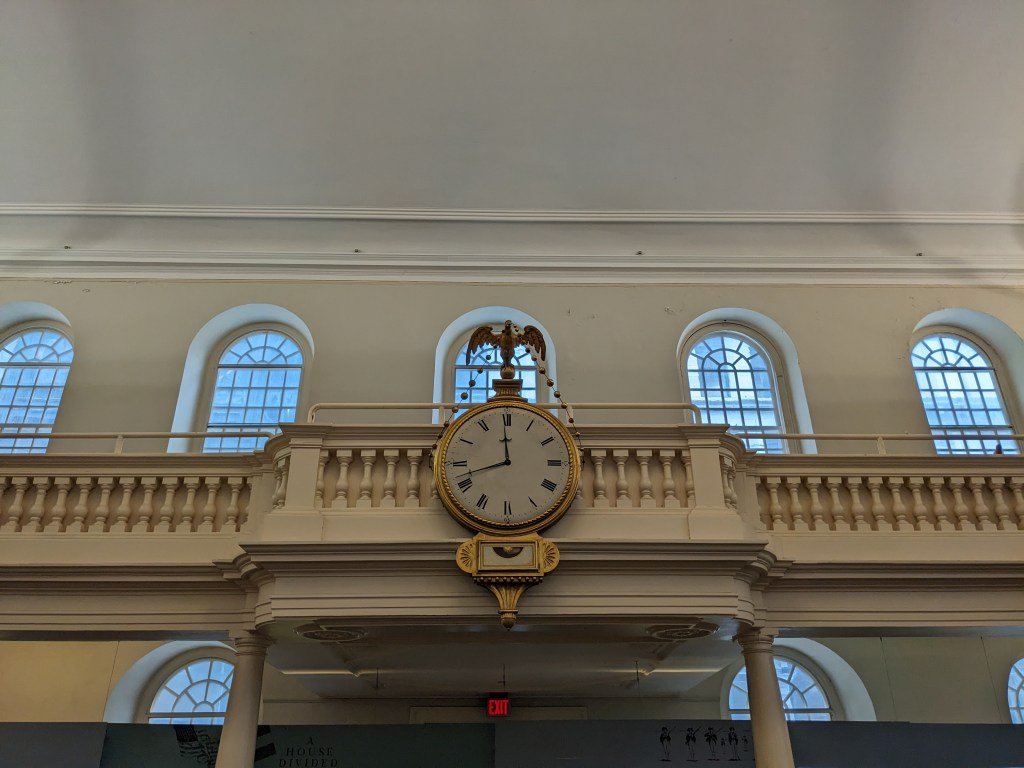
The Meeting House is a church which, during the Revolutionary area, became one of the main meeting places for those early revolutionaries: Paul Revere, Samuel Adams, John Hancock, etc. They were the Sons of Liberty, and they would be known for sayings such as ‘no taxation without representation!’ in response to import tariffs which the colonials did not get a say in. They were subjects of the British Crown after all, so they knew their rights, dammit!
This building, among others, would be where the Sons of Liberty formed many of their ideas, some of which would go on to form the basis for the US Constitution.
Inside, you will find the building is more or less laid out like a church; a central alter, where it’s understood many of the speakers would have stood, and surrounding pews laid out so they are all facing it – interestingly enough, each of them is fully enclosed by a wooden surround, leaving me only just enough legroom to sit down. There are also cut-outs of important individuals from Boston’s history going all the way up to the 20th century with a scannable QR code for more info near each, but I didn’t really have the time to go through every single one. Whilst I was here, there was another talk from a member of staff about the buildings importance, which was, again, really interesting and helped out by the enthusiastic speaker. Fun fact: this apparently used to be the tallest building in the city before all the skyscrapers started going up, and was also narrowly saved from the Great Boston Fire of 1872.
The Meeting House doesn’t take too long to see all of as the accessible area is essentially all one big room, so we’ll come out now, and make our way to the next destination which can be considered part of ‘the old’.

Here you see the Old Corner Bookstore, one of the other colonial/revolutionary era sites. It is now a Chipotle Restaurant. I did not go in, as I opted for a cheaper lunch from the supermarket opposite.
Moving on, we will now backtrack past the Old State House, turn left onto Congress Street, right onto Hanover Street, and then start heading into North End – known for being one of Boston’s oldest districts, as well as a fantastic place to go if you like Italian food. Either way, on to the next destination.
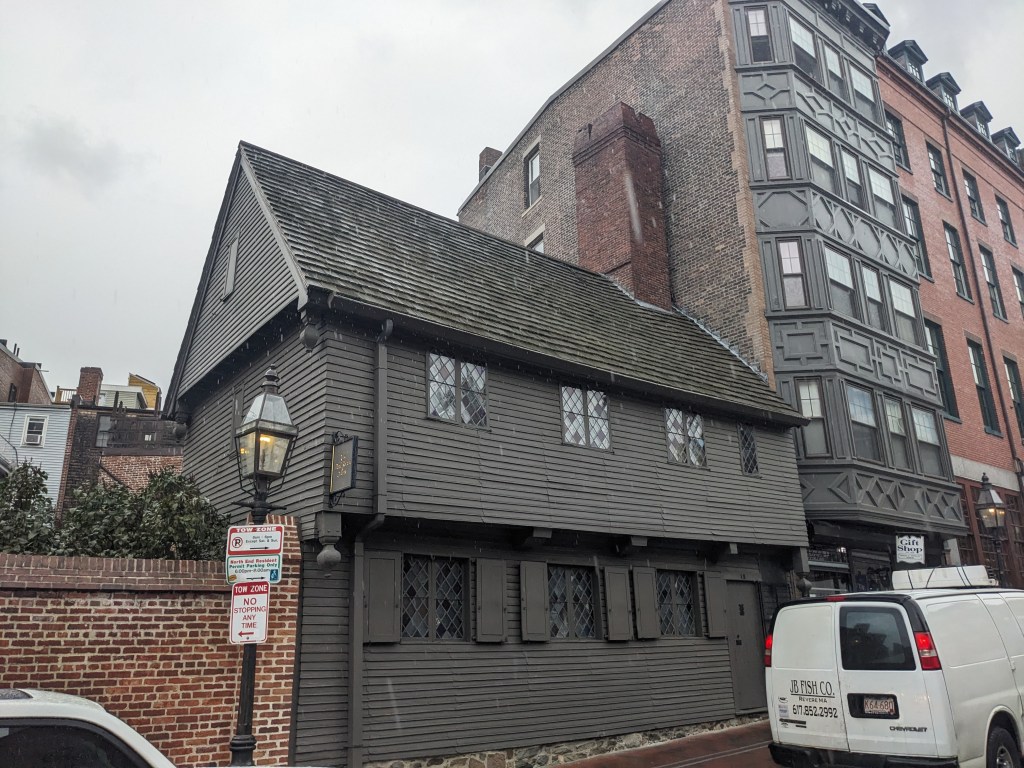
This is an old house. It is even older, in fact, than some houses in England. More specifically, it is the house of Paul Revere. Remember him?
A bit on old Paul, first of all – Paul Revere, born 1735, was a renowned silversmith and respected member of the community in Boston. As mentioned, he was one of the Sons of Liberty, and was well connected with many of the other early revolutionaries mentioned – when the Tea Party of 1773 happened, Revere was directly involved, along with other events, but we will get to these in due course.
The house, though, is a good little place to explore. It doesn’t take too long to go around, and is a typical example of a comfortable late 17th century townhouse, and was all fully furnished. One thing I notice about these sorts of houses, compared to, for instance, English houses of the same era, is that North American houses seem to be made entirely out of timber.
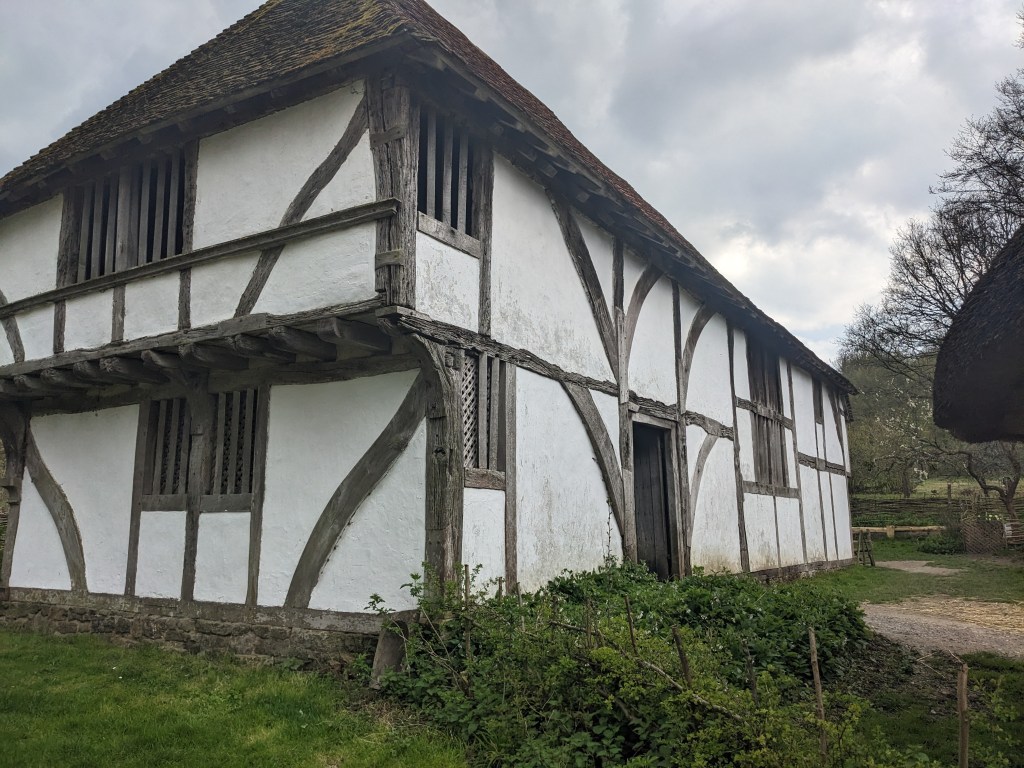
Above: Example of a comparable sized English house of the 17th century; note the lack of glazing in this example, although if I recall this is from earlier in the century, and possibly not as wealthy a dwelling. This example can be seen at the Weald & Downland Museum, West Sussex.
This may simply be due to the higher abundance of timber in this part of North America – don’t forget that much of the land in England would already have been farmed by this time. I went on a tangent again, didn’t I?
Regardless – it was good to have a look around the rooms, and learn from the staff. Paul would later move to a slightly bigger house, but due to its association with him during the revolutionary era, was fortunate enough to be preserved. As well as the house, there is also a small museum, and a courtyard, which is where I stopped to have my lunch. And, as I started to get going, it began to rain.
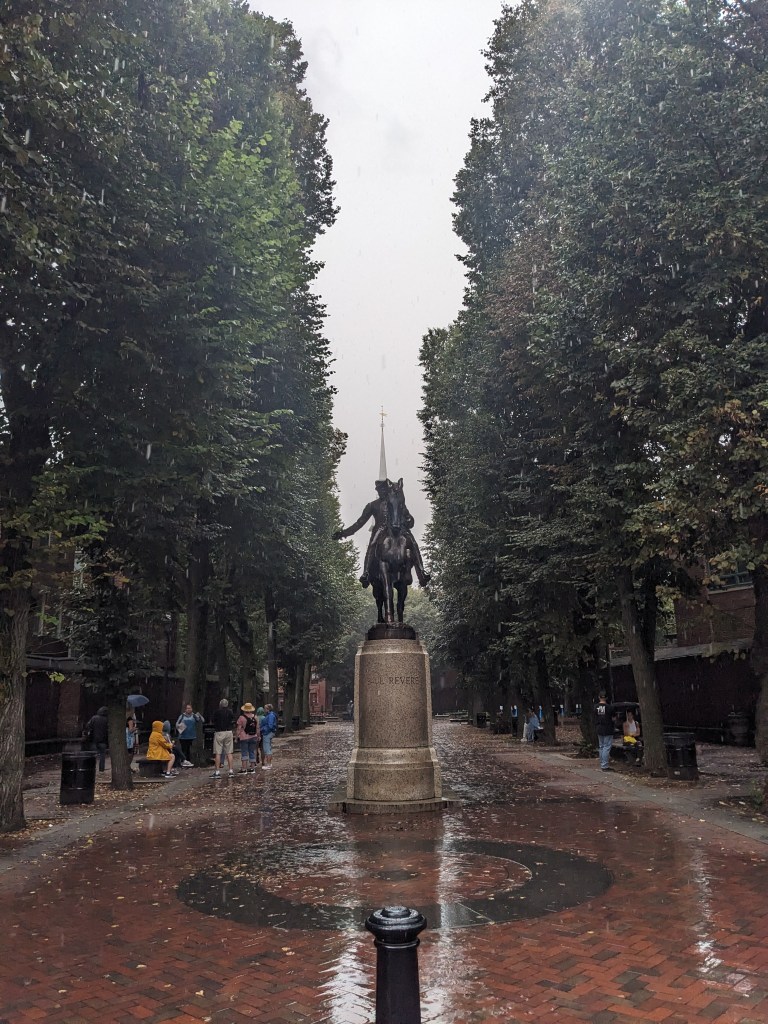
Aaaand rain it did – as you can see here, drenching both Mr. Revere and his horse. And that spire you see behind him?

That’d be the Old North Church – now, one of the things our friend Paul Revere is best known for is the Midnight ride. This was when, in April 1775 during the start of the Revolution, someone needed to ride up to the nearby town of Concorde under the cover of night where the revolutionaries had weapons stashed, and warn the burgeoning militia that the King’s troops were headed that way – it just so happens, Paul Revere was the man for the job. Now, before crossing the Charles River, Revere would have come to this very church, and instructed the church sexton to hang two lanterns beneath the steeple – for, as the famous Henry Longfellow poem goes, ‘One if by land, two if by sea...’ – this was because the soldiers had elected to make their route via the Charles River, as opposed to going from a more inland route. When he got to the point of warning everyone, he is popularly believed to have shouted ‘The British are Coming!’ However, this is most likely not correct – more reliable sources indicate he may have said something more along the lines of ‘The regulars are coming,’ for, at this time, he and the other colonials would have still considered themselves to be British.

Next, we arrive at Copps Hill Burial Ground, as pictured above – I didn’t spend very long here, partially due to the weather and partially because I wanted to fit in as much as possible, however as I understand, it is another notable burial site along the Freedom Trail. So, leaving here, we are going down the hill, navigating our way through some traffic and crossing the River Charles, before we arrive at our next destination.
Huzzah, her sides are made of iron!
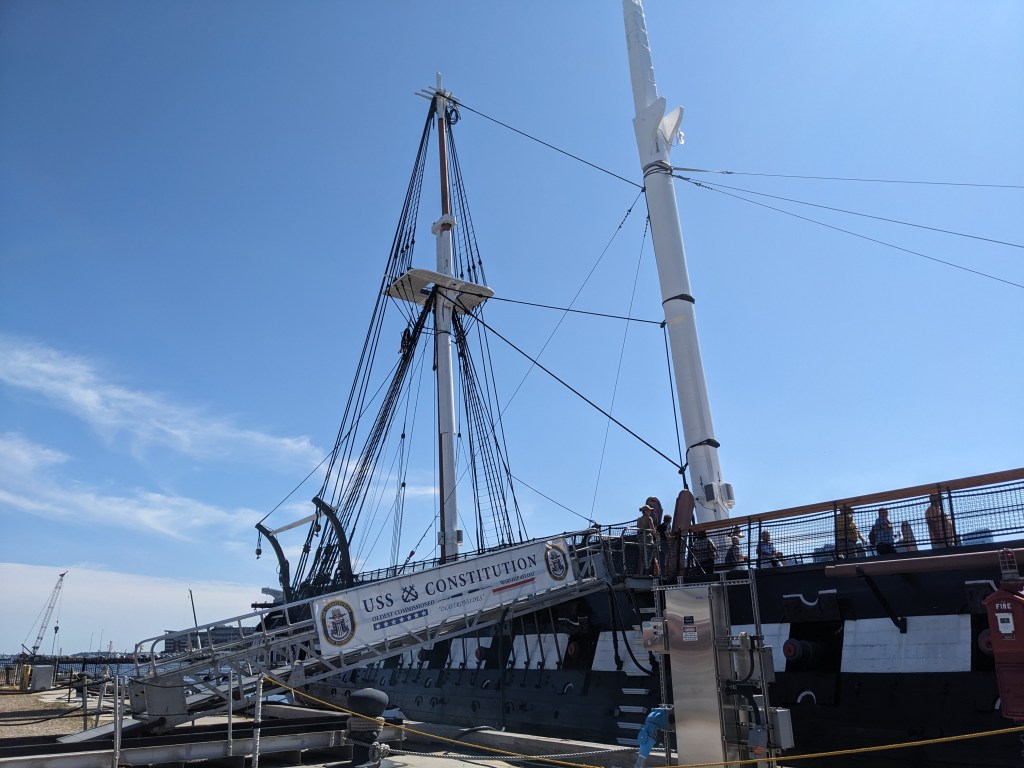
So, this one I technically did over two days – as mentioned, The USS Constitution and Cassin Young were closed the day I did the Freedom Trail, but it’s all being put together here. Henceforth, we shall journey into the Charlestown Navy Yard, where they are both berthed.
To start with, the Constitution is an impressive ship to see, first and foremost in how immaculately she is maintained, which undoubtedly has something to do with her being an active US Navy warship – the oldest, in fact, in the entire US Navy (and the oldest commissioned warship in the world still afloat!)
So, if you grew up in the South of England near the Solent, it’s quite likely that at some point, you had a school trip down to Portsmouth Dockyard, and during that, I would be very surprised if you didn’t go aboard HMS Victory (which does happen to be the world’s oldest commissioned warship, but is permanently in a drydock). Now, the Constitution, or Old Ironsides, as she is often nicknamed, holds something of an equivalent status and significance (although it is worth pointing out that they are quite different classes of ship – Constitution being a 44 gun frigate, and Victory a 104 gun first rate ship-of-the-line).
Comparisons aside, though – Old Ironsides was built in Boston and first launched in 1797, but is best known for her role in the War of 1812 (in yet another slight against the Crown, I might add). Amidst this, she is probably best known for her defeat of three Royal Navy warships; HMS Guerriere in one engagement, and later on the defeat and capture of HMS Cyane and HMS Levant in a separate engagement. Also, it was during the battle between Constitution and Guerriere that one of the sailors aboard the British vessel famously proclaimed, ‘Huzzah! Her sides are made of iron!’ as many of the shots from Guerrier’s cannons were seen bouncing off of Constitutions sides. Henceforth, they call her Old Ironsides (though she is made from oak, not iron – you’re not likely to see iron hulled warships pop up until just under fifty years later).
One of the best things about the Constitution, though, is that she is free to go on when open. What you will find, though, is that as much as she is an old ship, the US Navy takes the fact she is still a commissioned warship very seriously – almost all staff you see on the ship will be serving US Navy personnel. Some of them (mainly on the top decks) wear period costumes; many more wear the modern US Navy combat dress. You can also watch them perform drills with one of the cannons outside the ship, and watch them shout BANG! when the cannon would fire.
One oddity I noticed whilst on board were the cannons.

What’s that atop the barrel? Is it… a British Royal Seal?
Irony aside, I couldn’t help my curiosity, so I asked one of the sailors about this – apparently, they have this because all the guns are reproductions, and the casting that had this design was the best to fit the ship. Interestingly enough, although reproductions, unlike on many preserved warships (such as HMS Victory), none of these are fibreglass, but are instead all cast iron. Why, you ask?
Well, this brings us to another notable tradition in the Constitution’s repertoire: about twice a year, she is towed out into the bay, performs a gun salute using these very cannons, and is then towed back, typically facing the other way. The purpose of this is twofold; one, it means that if the ship changes direction every so often, her sides will weather evenly. Furthermore, as part of being a serving warship, this partly allows the USN to justify her service by saying, ‘She can still sail, dammit!’
The Royal Navy, on the other hand, has a somewhat looser definition of what a warship is – IE, anything that is commissioned as a warship – the Royal Navy may not rule over land, after all, but no one said that certain bits of land can’t be commissioned as a warship! (Also justifies Victory being permanently drydocked, and explains why RN shore establishments have HMS before them.)

In fact only the day after my visit, I happened to be sitting at Long Wharf in between activities, just casually looking out in the harbour – I was actually aware of the custom beforehand, but thought the likelihood of me witnessing it was unlikely. However, what did I just so happen to see when, purely by chance I was sat on Long Wharf at just that moment? Yup, that’s my photo, and I heard the gun salute to confirm it.
Ships aside, though, the museum is well worth seeing – although immaculate, Constitution herself has little in the way of information displays on board. This is because the vast majority of the history and the details of the ship (such as what I mentioned) can be found in the museum, which is paid entry, but not too expensive, and I got in with my activity pass. There is a really nice combination of information, artefacts and hands on stuff to cater to all audiences, and it was fascinating also where the museum was able to really tell the personal experiences of sailors from those early days of the US Navy, with the displays following a few examples.
Before we move on, as mentioned the main other thing to see here is the USS Cassin Young, also accessible for free.

As you may be able to guess, Cassin Young is a World War II era ship – specifically, a Fletcher Class Destroyer (and here sides are actually made of iron). And, though unlike her older counterpart the other side of the wharf she may no longer be in commission, she is still kept in incredible order as a museum ship, with most of the main deck accessible. Everything aboard is set up as it would have been in the 1940s, and you will see many personnel onboard wearing era-appropriate uniforms. I am unsure if these are serving USN personnel or costumed guides, however perhaps someone might be able to advise.
For a bit of history, she was first commissioned in 1943, and served at Leyte Gulf and Okinawa. She would then be decommissioned following WWII, but reactivated for the Korean War, and would finally go out of service in 1974. I would write more, however, I don’t want everything I write to be just what I have pulled from online – one very minor disappointment when seeing the Cassin Young was that there wasn’t that much information available – either on board the ship or near it (at least that I found). However, like Constitution, she is well worth seeing if you happen to be in Charlestown, and I do appreciate cultural and historic attractions that are free for all to experience. Here’s a couple more of her:
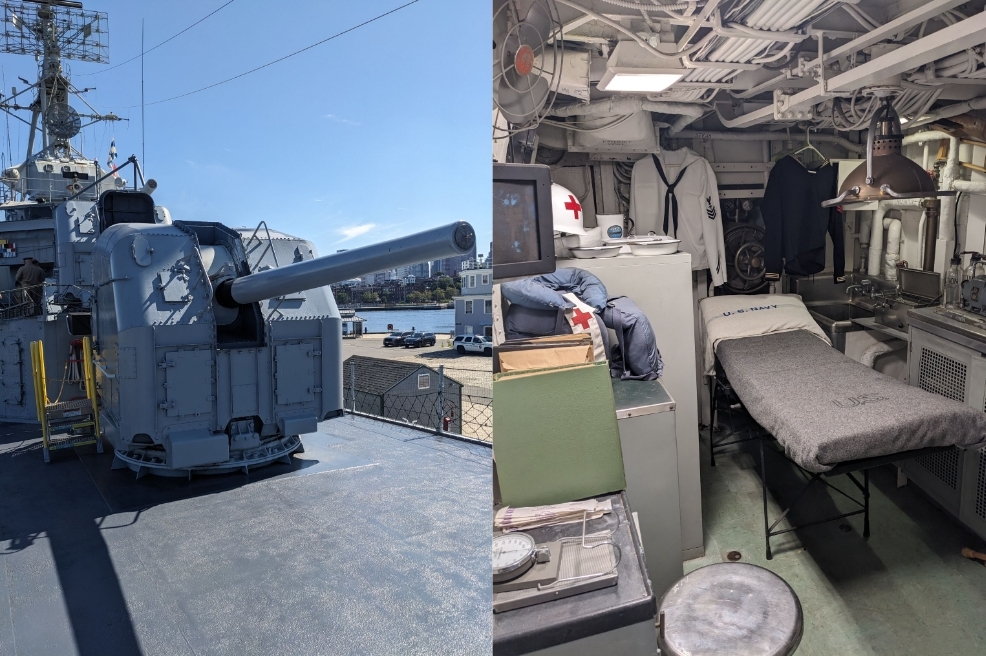
We now leave Charlestown Navy Yard. Going out of the gates, across a main road and along several streets, we have now ended up at the last destination on the Freedom Trail for this visit:

This big obelisk is the Bunker Hill monument. I didn’t spend too long here, however, in times when it is not covered in scaffolding, I understand that you can go all the way to the top of this monument and look out. It commemorates the Battle of Bunker Hill in 1775, which was one of the most prominent engagements of the Revolutionary War, and also, due to the structure’s own height and its position atop a hill, the monument can be seen from a great distance, and dominates the skyline of the Charlestown area where there are fewer tall buildings than the city centre. Walking past this, though, marked the end of the main venture along the Freedom Trail (though I would revisit certain sites again in passing). We will come back to the historic stuff later, though. As we head out of Charlestown, I hope you like walking!
The New (Part I)
A Prudential View
Where are we going next? Well first, let’s walk all the way out from Charlestown, head across the Charles River Dam (past tomorrow’s destination – we’ll get there in due course), and then go back into the city, past the Common and through the Back Bay neighbourhood. Amidst the brownstone buildings here, you will see one of a few skyscrapers that stands out above the rest.

This is the Prudential Tower – just in case the word Prudential written at the top of a big tower isn’t enough of a clue. Rising above the Prudential Shopping Mall, this 52 floor skyscraper is either Boston’s 2nd tallest (if you don’t count the antenna on top), or tallest (if you do count them) building. It is also home to the highest observation deck in the city. The other tallest building you can just see to the left of the above photo, is 200 Clarendon Street (more popularly known as the John Hancock Tower).
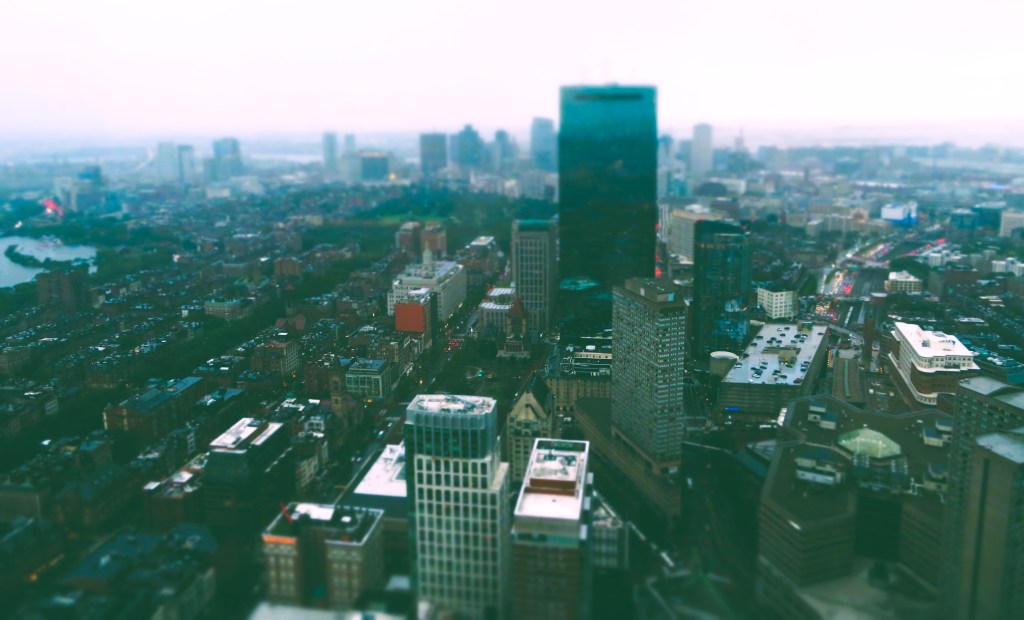
The view from the top, looking towards 200 Clarendon – yes, I am proud of this photo – somehow the moody weather makes it better!
Like most of the places I saw, this was on my all in one pass – you go into the Prudential Centre, get your ticket, and take a very colourful elevator up to the top. Now, whilst not as famous as, for instance, the observation platform on the Empire State Building, and neither is it the tallest, one thing that sets it apart is how spacious the area is – in that first photo, more or less the entire top section you can see is accessible, with glass all along offering completely uninterrupted 360 degree panoramic views of Boston and surrounding Massachusetts as you walk around. There is a bar up there, which I didn’t go in due to price, but really, it’s just nice to spend a good while up there and see as much as you can from afar – I also couldn’t resist sharing it with some close friends on video call at the time! There is also a gift shop, and a 3d digital display of the city, so you definitely get your dollars worth.
As per the title of this section, this was a good chance to see a tall new building to contrast with some of the older buildings I looked at earlier – I say newest, the tower was actually completed in 1964 – however, it is very much in the modernist style, and has been extensively modernised since, so I think it counts. Some of the prominent locations you can see from the top include:
- The Common and Massachusetts State House, looking East
- Jamaica Plain and the distant Blue Hills, looking South
- Fenway Park Stadium, looking West
- MIT Great Dome, Charles River Dam and Museum of Science, looking North
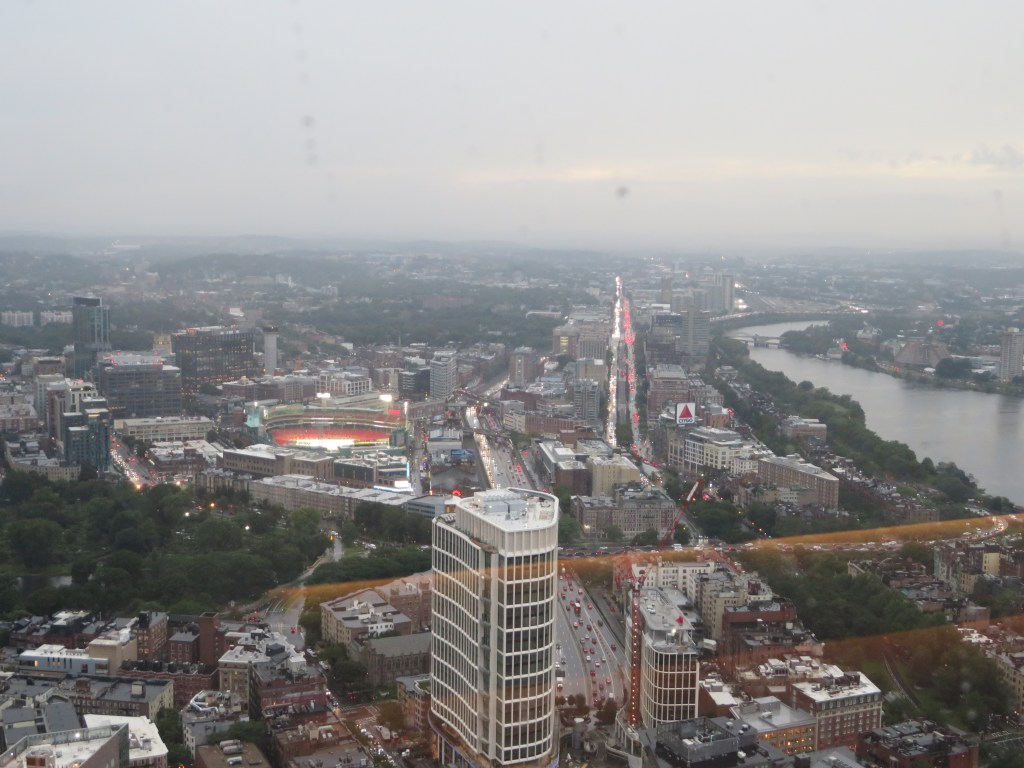

Science!

So as you may have gathered, one of the best things about Boston as a tourist is the wealth of interesting museums, and, well, our next destination does not disappoint. The Museum of Science, as mentioned, straddles the Charles River Dam, and is definitely a good showcase for some of the modern aspects of the city (as well as a few historic exhibits).
On the day of my visit, I didn’t fancy walking after how much I had done the previous day along the Freedom Trail and through Back Bay, so I caught The T for the first time (quick reminder, that is the local nickname for Boston’s metro system, and comes from the T in MBTA – Massachusetts Bay Transportation Authority). Conveniently, there is a station located very near the museum: Science Park Station, surprisingly enough. Getting there a few minutes after opening time and on a weekday, I was able to enter without having to worry about crowds, and managed to enjoy more or less the entire thing at a leisurely pace.
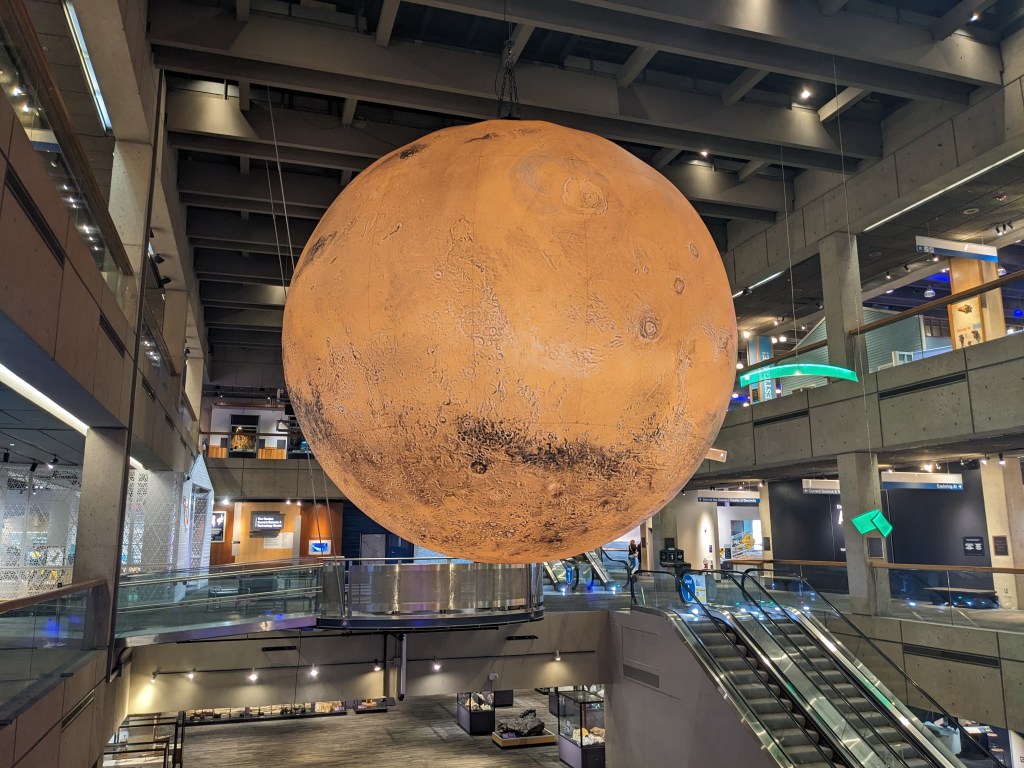
Once you book in and head into the main area, the first thing you are greeted by is a large atrium with Mars hanging from the centre. From here, there’s no set order in which to visit all the galleries, so you can head in whichever direction you want to start.

This is a cross section of a Giant Sequoia Tree which is in the main atrium. Looking through that little magnifying glass, you can see some of the rings in detail, each showing a year and the wider ones representing years of more favourable growth. This one was over 2,000 years old when felled!
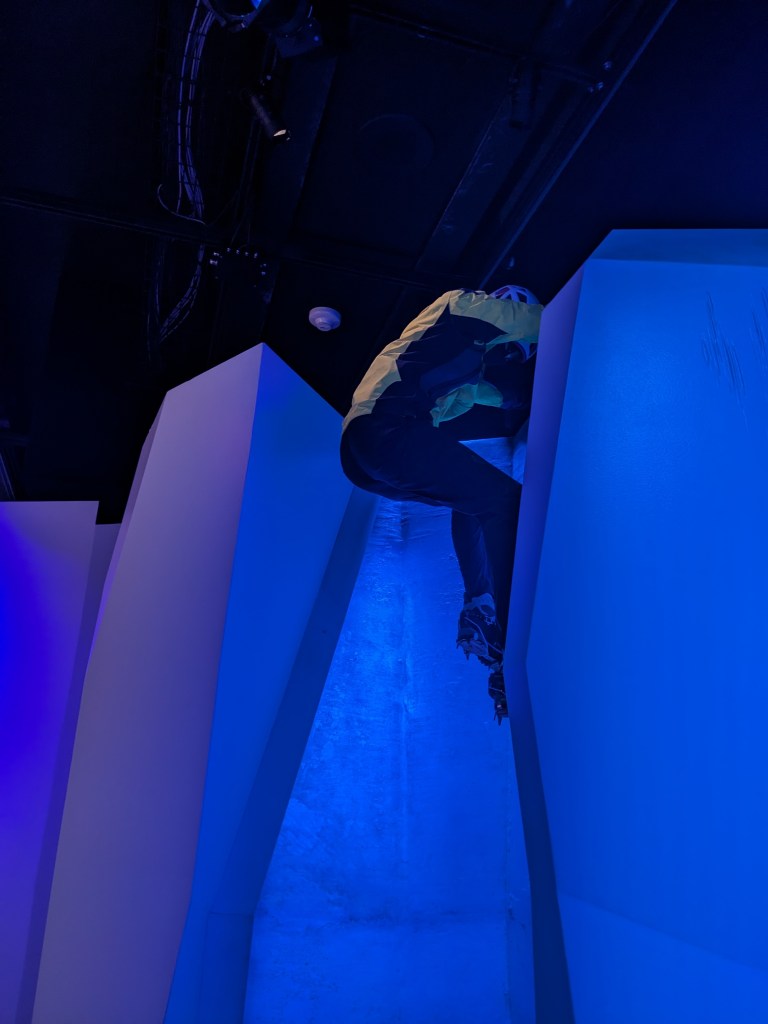
One of the first main areas you may come across is the Arctic Gallery – in here, there are a number of interactive activities related to artic research, conservation and some of the effects of climate change.
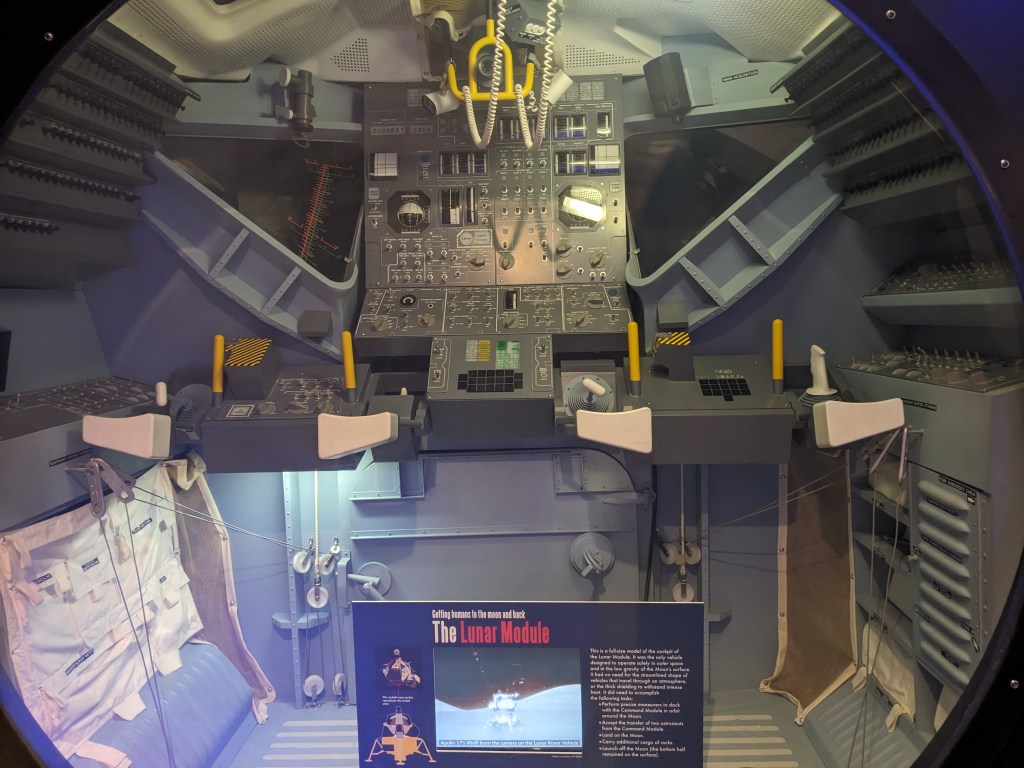
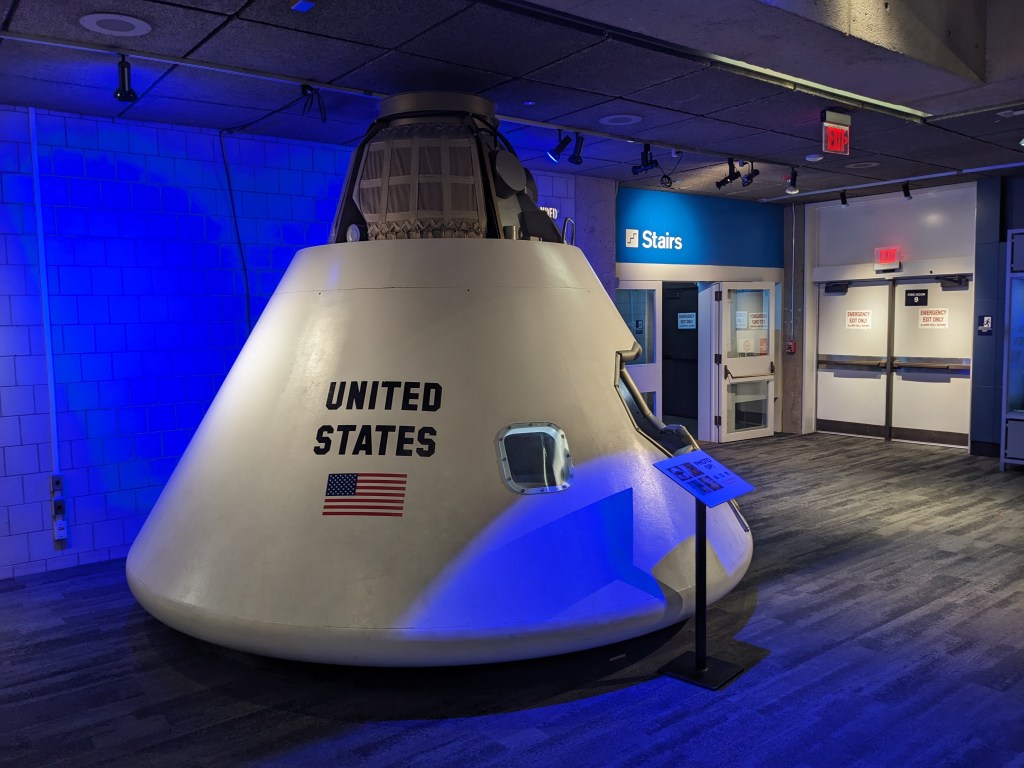
Heading downstairs to the bottom of the atrium is the section on space travel, with Mars ominously looming above your head (I’m surprised they didn’t have background music by Holst). There are replicas of the Mercury Spacecraft, Eagle Lunar Module and Apollo Command Module (the latter of which they have built so you can sit in and give your best impersonation of Major Tom).

Yes, that is part of the museum (I will save this section for later on)!

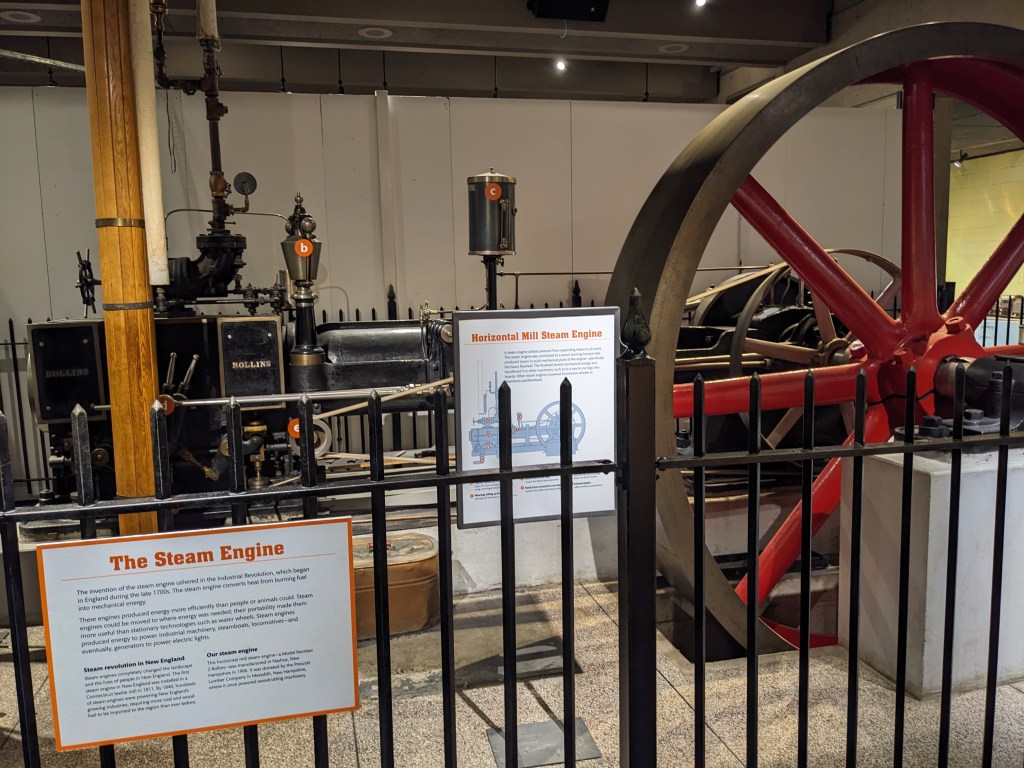
Downstairs at the back is an area largely dedicated to planes, trains and automobiles (and ships too).
 The Warsmith